
An infected loose tooth in a child can be worrying, but the main thing to do is simple: call a pediatric dentist promptly. In the meantime, keep the area clean, avoid pulling the tooth, and use soft foods and age-appropriate pain relief to keep your child comfortable.
While a wiggly baby tooth is usually a normal part of childhood, a loose tooth with pain, swelling, pus, fever, or bad breath is a sign of infection and shouldn’t wait.
A loose tooth can become infected when decay reaches the pulp, after an injury, or from a dental abscess. Left untreated, the infection can spread to nearby teeth, gums, and bone.
The good news is that Medicaid typically covers medically necessary pediatric dental services, including exams, X-rays, emergency visits, and treatment for dental infections.
If your child has a loose tooth and signs of infection, contact The Kids Dental Office at (602) 903-4894.
Can a Loose Baby Tooth Become Infected?
Yes. A loose baby tooth can become infected for several reasons. Sometimes the infection develops before the tooth becomes loose. In other situations, trauma or advanced decay can weaken the tooth and cause it to loosen.
A loose tooth infection often develops when bacteria reach the pulp inside the tooth.
The pulp contains:
- Nerves
- Blood vessels
- Connective tissue
Once bacteria enter the pulp, an infection can develop and spread into the root and surrounding tissues.
What Causes an Infected Loose Tooth in a Child?
Several conditions can lead to an infected baby tooth.
Tooth Decay
One of the most common causes is untreated tooth decay. A cavity may begin in the enamel but gradually spread deeper into the tooth.
Advanced tooth decay may result in:
- Pain
- Swelling
- Abscess formation
- Premature loosening of the tooth
As the decay reaches the dentin and eventually the pulp, bacteria can cause infection and inflammation.
Dental Abscess
A dental abscess is a pocket of infection that develops near the root of a tooth.
An abscessed baby tooth can exert significant pressure and inflammation on the root, leading to loosening of the tooth.
Dental Trauma
A fall, sports injury, or other dental trauma can damage the tooth and its blood supply.
Months after the original injury, bacteria may enter the damaged pulp, leading to an infection.
A tooth that was bumped, hit, or fractured can sometimes become loose and infected long after the initial accident.
Gum Infection
Although less common in young children, infection affecting the gums and supporting structures around the teeth can contribute to looseness and discomfort.
Symptoms of an Infected Loose Tooth
Parents should watch for signs that a loose tooth involves more than normal tooth development.
Common symptoms of infection include:
- Tooth pain
- Swollen gums
- Red gums
- Tender gums
- Facial swelling
- Pus around the tooth
- A pimple-like bump on the gum
- Fever
- Bad breath
- Difficulty chewing
- Sensitivity to pressure
- Increased tooth mobility
A loose tooth combined with swelling, pus, or fever should be evaluated promptly.
What Does a Dental Abscess Look Like?
An abscess often appears as a small bump on the gums near the affected tooth.
The bump may:
- Look like a pimple
- Drain pus
- Appear red or swollen
- Cause tenderness
An abscessed tooth may also create a bad taste in the mouth or persistent bad breath.
Even if pain improves after an abscess begins to drain, the infection remains and requires treatment.
Is an Infected Loose Tooth a Dental Emergency?
In many cases, yes.
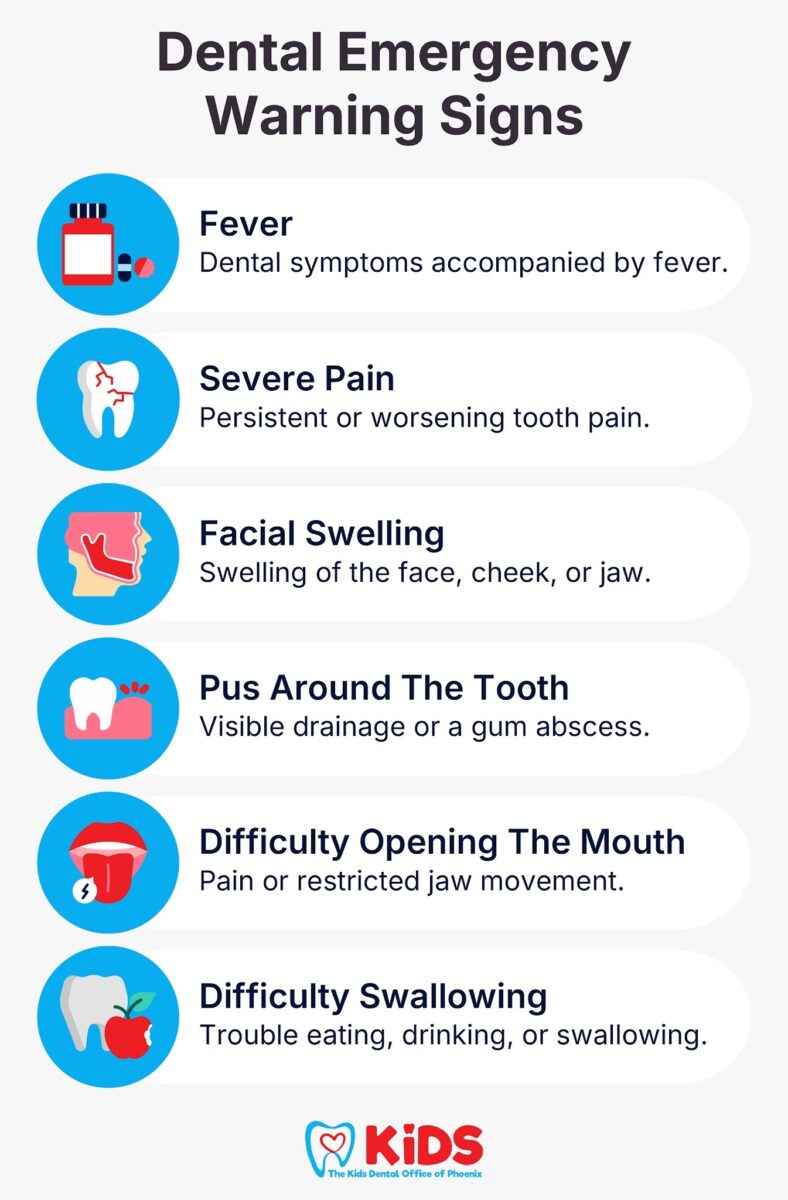
Parents should contact a pediatric dentist as soon as possible if a child develops:
- Significant swelling
- Facial swelling
- Fever
- Severe pain
- Difficulty swallowing
- Difficulty opening the mouth
- Pus draining from the gums
If your child has facial swelling together with a fever, difficulty swallowing, difficulty breathing, or difficulty opening the mouth, go to an emergency room or call 911 right away. Do not wait for a dental appointment.
Dental infections can spread beyond the tooth and should not be ignored.
Prompt treatment helps relieve discomfort and reduce the risk of complications.
What Should Parents Do Before the Appointment?
While waiting to see a dentist, parents can take several steps to help their child remain comfortable.
Keep the Area Clean
Have your child gently rinse with warm water, if age-appropriate.
This can help remove food debris and reduce irritation.
Avoid Pulling the Tooth
Even if the tooth feels very loose, do not force it out.
Removing an infected tooth prematurely can sometimes increase discomfort or complicate treatment.
Offer Soft Foods
Examples include:
- Yogurt
- Applesauce
- Mashed potatoes
- Scrambled eggs
- Smoothies
Soft foods may be easier to eat if chewing causes pain.
Use Age-Appropriate Pain Relief
If needed, age-appropriate pain relief may help reduce discomfort until the dental appointment.
Follow the dosing instructions provided by your child’s physician, pharmacist or the back of the bottle.
How Does a Pediatric Dentist Diagnose a Loose Tooth Infection?
The evaluation usually begins with a clinical examination.
The pediatric dentist will assess:
- Tooth mobility
- Gum health
- Signs of infection
- Pain levels
- Swelling
- Visible decay
X-rays are often necessary.
An X-ray helps identify:
- Tooth decay beneath the surface
- Root damage
- Infection around the root
- Bone involvement
- Development of permanent teeth
Diagnostic imaging allows the dentist to determine the best treatment option.
Treatment for an Infected Loose Tooth in a Child
Treatment depends on the severity of the infection and the condition of the tooth.
Antibiotics
If significant infection or swelling is present, antibiotics may be prescribed.
Amoxicillin is one of the medications commonly used for pediatric dental infections.
However, antibiotics alone usually do not eliminate the underlying dental problem.
The source of the infection must also be treated.
Pulp Therapy
If the tooth can be preserved, pulp therapy may be recommended.
Common procedures include:
- Pulpotomy
- Pulpectomy
These treatments remove infected pulp tissue while preserving the baby tooth.
Pulp therapy is often considered when preserving the primary tooth, as it supports speech development, chewing, and spacing.
Extraction
Some infected baby teeth cannot be saved.
Tooth extraction may be necessary when:
- The infection is extensive.
- Significant decay is present.
- The tooth is severely loose.
- The tooth cannot be restored.
Removing the infected tooth often provides rapid pain relief and eliminates the source of infection.
Space Maintainers
If a primary tooth is removed earlier than expected, a space maintainer may be recommended.
A space maintainer helps preserve room for the developing permanent tooth.
How Does an Infected Baby Tooth Affect Permanent Teeth?
Many parents assume that a baby tooth is unimportant because it will eventually fall out. However, primary teeth help guide permanent teeth into their proper positions.
An untreated infection can sometimes affect:
- Developing permanent teeth
- Tooth eruption patterns
- Surrounding bone
- Alignment of future teeth
Early treatment helps protect both current and future oral health.
Does Medicaid Cover Treatment for an Infected Loose Tooth?
In most cases, yes. Medicaid provides comprehensive pediatric dental coverage because dental care is considered an important part of a child’s overall health.
Covered services commonly include:
- Dental examinations
- Emergency dental visits
- X-rays
- Diagnostic services
- Treatment of dental infections
- Tooth extractions
- Pulp therapy
- Preventive care
Coverage details may vary by Medicaid plan and state program, but medically necessary treatment for an infected baby tooth is typically covered for children.
Does AHCCCS Cover Pediatric Dental Treatment?
In Arizona, AHCCCS serves as the state’s Medicaid program.
Children enrolled through AHCCCS generally have access to covered pediatric dental services, including urgent treatment for dental infections, abscesses, and other dental emergencies.
Covered services often include:
- Dental exams
- X-rays
- Emergency evaluations
- Tooth extraction
- Pulpotomy procedures
- Pulpectomy procedures
- Other medically necessary treatment
A pediatric dental office can often verify coverage and explain available benefits.
When Should Parents Call a Pediatric Dentist?
Schedule an appointment if your child has:
- A loose tooth with pain
- A loose tooth with swelling
- An abscessed baby tooth
- Pus near a tooth
- Fever and dental symptoms
- Significant tooth decay
- Persistent bad breath associated with a specific tooth
- A loose tooth after trauma
Early treatment can prevent the infection from worsening and help preserve your child’s oral health.
Contact The Kids Dental Office for Help
An infected loose tooth in a child may be caused by tooth decay, trauma, or a dental abscess. While some loose baby teeth are part of normal development, signs of infection, such as swelling, pain, pus, or fever, should never be ignored.
At The Kids Dental Office, our team provides comprehensive pediatric dental care, including emergency evaluations, treatment for dental infections, extractions, pulp therapy, and other services commonly covered by Medicaid and AHCCCS for children.
If your child has a loose tooth and signs of infection, contact The Kids Dental Office at (602) 903-4894.