If you are the parent of a child with special needs, such as autism, Down syndrome, or cerebral palsy, or who is experiencing sensory sensitivities, developmental disabilities, anxiety, mobility challenges, or other special healthcare needs, a successful dental visit may require more preparation, flexibility, patience, and individualized support.
Children with developmental, physical, behavioral, sensory, and medical conditions may face barriers to daily brushing, flossing, communicating pain, tolerating treatment, or physically accessing care.
Certain medications, diets, oral habits, medical conditions, muscle-control differences, and tooth-development patterns can also affect oral health. Untreated dental disease can cause pain, infection, problems eating or sleeping, and a need for more complex treatment later.
Why Choose The Kids Dental Office of Phoenix as Your Special Needs Dentist?
At The Kids’ Dental Office of Phoenix, our pediatric dentists and orthodontists have the training and experience to provide high-quality dental care to children with special needs and children who may be difficult to treat in a traditional dental setting.
Our office offers child-friendly activities, extra comfort when needed, and sedation options when clinically appropriate. We can help your child receive the dental care he or she needs while feeling heard, respected, and as comfortable as possible.
Call us at (602) 903-4894 or reach us online to share your child’s special needs, to let us know what has helped during previous healthcare visits, and to inform us of what we can do to reduce the stress of a dental exam. We can discuss your concerns, available accommodations, insurance, and the best way to begin.
What Is Special Needs Pediatric Dentistry?
Special needs pediatric dentistry is oral healthcare for children whose physical, developmental, sensory, behavioral, cognitive, emotional, or medical needs may affect their dental treatment. Special needs dentistry provides all of the same preventive and restorative services that other children receive, but the delivery of those services is adapted to your child’s special needs.
This individualized approach may include:
- Making additional time to learn how your child communicates.
- Breaking a visit into smaller, more manageable steps.
- Introducing instruments before using them.
- Using simple language, visual cues, positive reinforcement, or a “tell-show-do” approach to dental procedures.
- Allowing for breaks or doing only what your child can comfortably tolerate for that day.
- Knowing your child’s sensitivities to sound, light, touch, taste, movement, or new locations.
- Planning for limited mobility, positioning, gagging, swallowing, seizures, or medical issues.
- Coordinating with parents, caregivers, physicians, therapists, or other healthcare professionals when needed.
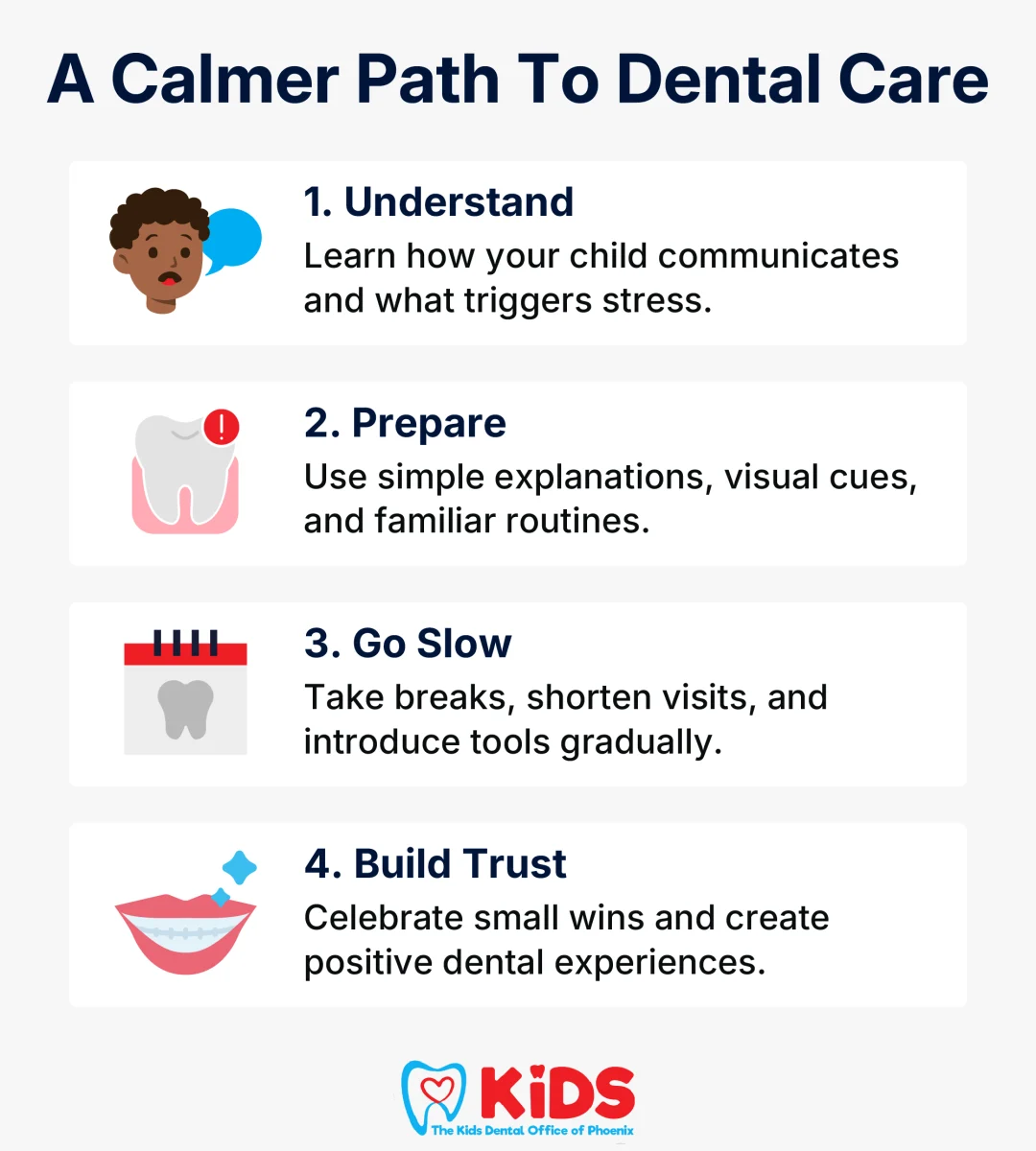
Effective special needs dentistry begins by listening to you and your child and creating a patient-specific, family-centered plan.
A Sensory-Conscious, Child-Centered Approach
Dental offices usually have bright lights, unfamiliar sounds, new textures, strong tastes, close physical contact, and changes in routine. For a child with sensory sensitivities, this environment may be uncomfortable or overwhelming. Sensory-conscious dentists seek to identify these potential triggers before treatment and to reduce unnecessary stress.
Sensory-conscious strategies may include a slower introduction to the office, shorter visits, familiar comfort items, reduced distractions, clear explanations, consistent routines, praise, and opportunities to pause. A get-acquainted or desensitization visit may also help your child to become familiar with our office, our staff, the dental chair, and dental instruments before we begin dental care.
Because each child’s sensory needs are different, we strongly encourage you to call us before the appointment to discuss any specific triggers, comfort strategies, and accommodations to support a positive dental experience.
Building Communication, Patience, and Trust
Your child may communicate with words, gestures, pictures, a communication device, facial expressions, or changes in behavior. Our special needs dentists are trained to recognize the earliest signs that your child is becoming anxious, tired, overstimulated, or uncomfortable. Sharing this information with our dental team can make the visit safer and more positive.
Special needs pediatric dentistry may also use techniques like tell-show-do, brief one-step directions, demonstrations, positive reinforcement, distraction, desensitization, or picture-based communication.
Trust between your child and one of our dentists may develop during one visit, or it may take several appointments. Progress can mean completing an exam and cleaning, but it can also mean entering the treatment room, sitting in the chair, meeting the dental team, or allowing a brief look inside the mouth. Our compassionate approach respects these smaller successes while continuing to promote and protect your child’s oral health.
Sedation Options When Appropriate
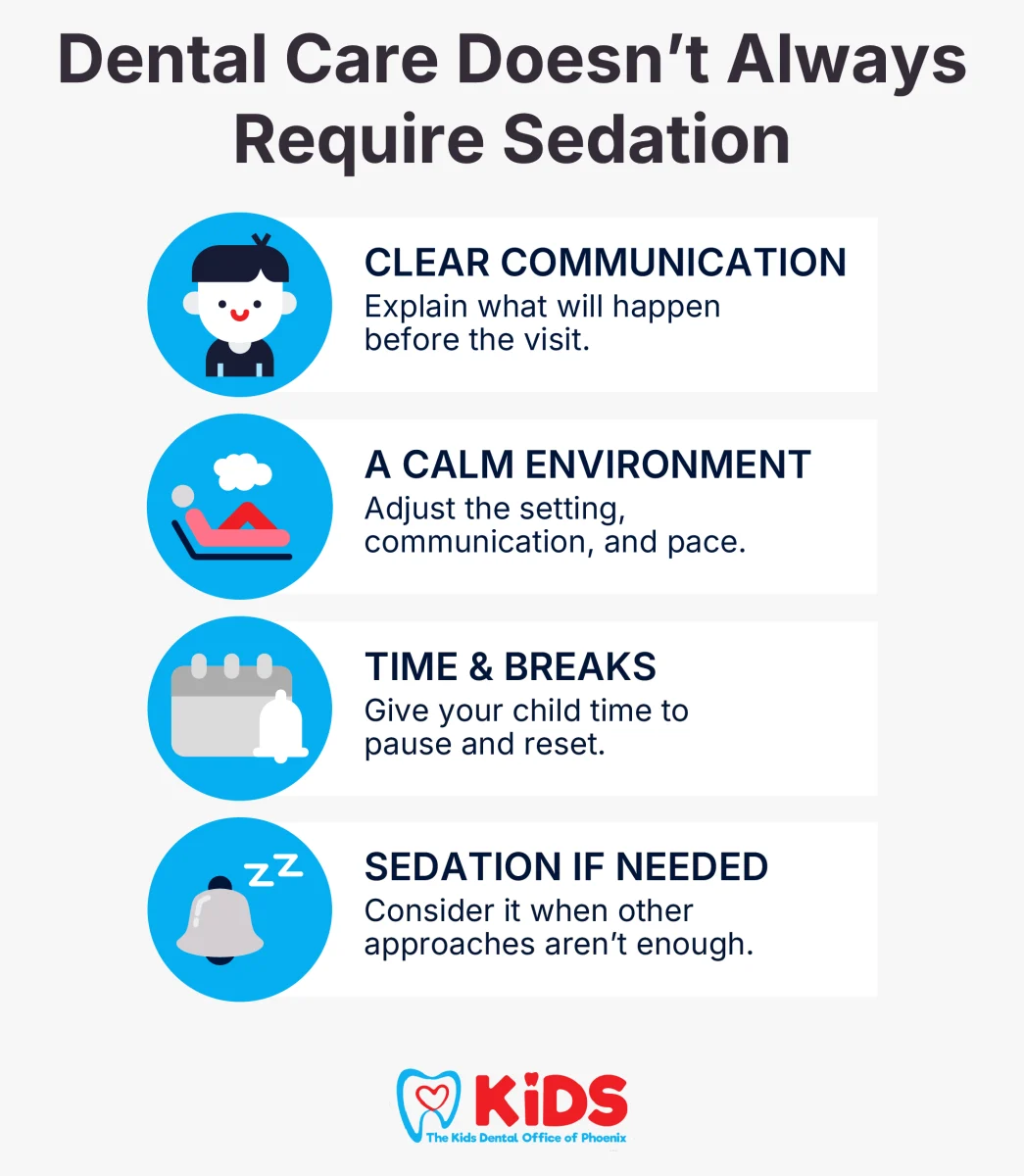
Your child does not necessarily need sedation just because he or she has a disability or special healthcare need. Many children can receive care without the need for sedation through patience, communication, desensitization, and other non-medication approaches.
For some children, sedation may help when anxiety, sensory distress, an inability to remain safely still, a strong gag reflex, a lengthy procedure, or any other medical or behavioral concern could otherwise prevent necessary treatment.
The Kids’ Dental Office of Phoenix provides minimal, moderate, and deep sedation and general anesthesia as needed, depending on your child’s needs. Prior to recommending sedation, our dental team will review your child’s health conditions, medications, allergies, airway considerations, previous reactions, and planned treatment. Your child’s dentist will review the proposed option, its purpose, alternatives, benefits, and possible risks before treatment is started.
Dental Care for Children With Autism
Children with autism may be especially sensitive to unexpected changes, sounds, lights, flavors, textures, or touch around the face and mouth. Communication differences, anxiety, repetitive behaviors, unpredictable movement, or difficulty tolerating a change in routine can also affect their dental visits. Consistency, preparation, caregiver input, tell-show-do, short positive appointments, and gradual desensitization can be helpful when treating an autistic patient.
Before your child’s visit with us, let us know how your child communicates, what words or visual supports work best to reduce anxiety and promote a comfortable environment, whether there are sensory triggers, and whether your child has a comfort item or preferred reward. It is equally important to tell us what has not worked during previous medical or dental visits.
Dental Care for Children With Cerebral Palsy
Cerebral palsy can affect movement, muscle coordination, positioning, communication, swallowing, gagging, and your child’s ability to brush or floss independently. Some children may also experience seizures, reflux-related enamel erosion, food pouching, teeth grinding, drooling, or an increased risk of mouth injury.
In this case, your child’s dental plan should be based on his or her individual movement patterns, communication abilities, comfort, and medical needs.
Helpful adaptations may include careful positioning, head or neck support, short visits, frequent breaks, gentle instrument introduction, suction as tolerated, and caregiver guidance for home care. Some children with cerebral palsy can be treated in a dental chair, while others may require different positioning or other arrangements that should be discussed with our office before the visit.
Other Special Needs Dental Care Issues
An individualized pediatric approach can also help children with developmental delays, intellectual disabilities, ADHD, anxiety disorders, sensory-processing differences, seizure disorders, genetic or craniofacial conditions, limited mobility, complex medical histories, or difficulty cooperating during conventional dental care.
Children with certain medical conditions may be taking medications that affect their oral health or have physical challenges that make daily brushing difficult. Our team can recommend adaptive toothbrushes, demonstrate positioning techniques for you to help your child, and provide preventive treatments like dental sealants and fluoride applications to protect teeth when home care is challenging.
Preparing for Your Child’s Visit With Us
Preparation begins at home. If your child is a visual learner, we can provide a social story or photo sequence to help explain what to expect when coming to the dentist. Practice at home by opening wide and counting teeth together.
Before your child’s appointment, please tell us about:
- Your child’s diagnoses, health history, medications, allergies, and past surgeries.
- Seizures, breathing or airway concerns, reflux, swallowing difficulties, or cardiac conditions.
- How your child communicates and understands instructions.
- Sensitivities involving sound, light, taste, texture, touch, or movement.
- Any necessary mobility devices, positioning needs, or transfer needs.
- Favorite interests, comfort items, rewards, or calming strategies.
- Past dental experiences, including techniques that were helpful and those that were upsetting.
- Whether your child may benefit from a low-pressure introductory visit before treatment.
If your child is best able to communicate through gestures, pictures, or a communication device, please tell us. If loud noises cause meltdowns, we will plan for this. If your child has a favorite stuffed animal or fidget toy that comforts them, bring it along.
Please bring your insurance information, your child’s medication list, and any medical clearance or specialist information requested by our dental team. Depending on your child’s health and proposed treatment, coordination with a pediatrician may also be appropriate.
How to Have a More Comfortable Dental Visit for Your Special Needs Child
You know your child better than anyone! Share with us what makes your child feel safe, how they communicate, what they like, and what might make a dental visit difficult. Together we can discuss an approach that honors your child’s needs and takes care of their smile.
Our pediatric dentists at the Kids Dental Office of Phoenix work closely with you to understand your child’s medical history, behavioral patterns, and sensory sensitivities. We want you to know that we have worked with many children who need extra time, frequent breaks, or creative problem-solving approaches. Your child’s comfort, safety, and optimal dental health are always our top priorities, and we’re never in a rush.
Pediatric Dental Care With Specialized Training
Pediatric dentists complete specialty education after dental school focused on the oral health and behavioral needs of infants, children, adolescents, and young people with special healthcare needs.
All the pediatric dental specialists at The Kids’ Dental Office of Phoenix receive two years of additional child-focused training to help prepare them for our special needs patients. Our team of pediatric dentists includes dentists who have training in treating children with special healthcare needs, as well as training in pediatric sedation and hospital dentistry.
Medicaid and AHCCCS Dental Coverage for Eligible Children
Arizona’s Medicaid program is the Arizona Health Care Cost Containment System, or AHCCCS. Eligible children and adolescents receive dental benefits through Medicaid’s Early and Periodic Screening, Diagnostic, and Treatment program.
The Kids’ Dental Office of Phoenix accepts AHCCCS and KidsCare, Arizona’s Children’s Health Insurance Program (CHIP). Both of these programs cover patients with special needs.
Covered pediatric dental care includes preventive services and medically necessary treatment like dental exams, cleanings, fluoride, sealants, X-rays, fillings, crowns, endodontic care, emergency treatment, and other qualifying services.
We also offer hospital-based dental treatment at Phoenix Children’s Hospital.
When it is medically necessary, AHCCCS also covers sedation dentistry, including general anesthesia, conscious sedation, or minimal sedation when your child’s management requires it. Sedition overage is determined according to your child’s eligibility, clinical needs, health plan, provider network, and any applicable authorization requirements.
Call The Kids’ Dental Office of Phoenix at (602) 903-4894 to speak with a Phoenix special needs dentist, or use our online contact form to ask about special needs pediatric dentistry, AHCCCS or Medicaid coverage, available accommodations, sedation options, and appointment scheduling.